
medi
vero
vero
medivero
Website design concept for an AI-powered healthtech platform.
Medical professionals don’t trust technology that makes them feel replaceable. Here’s how design turned that fear into a reason to adopt.
ux research
information architecture
ui design
ai image generation
design system
figma
healthtech
The Context
MediVero is a self-initiated design concept exploring how an AI-powered diagnostics platform could be marketed to medical professionals. The brief, research, and all design decisions were driven entirely by independent analysis.
The Objective
Design a website concept that makes complex AI technology feel credible, accessible, and worth a demo request – without losing the clinical authority the healthcare industry demands.
My Role & Impact
As the sole designer on this concept, I led every phase – from market research and competitive analysis through information architecture, copywriting, and final UI.
Scope & Delivery
Executed in 6 weeks, from initial research to high-fidelity prototype. Final delivery includes a complete UI design system, responsive layouts, and a custom AI-generated visual language.
the situation.
project overview.
the problem.
The fear hiding inside the brief.
The brief I set myself was clear: design a healthtech marketing website that feels modern without losing clinical credibility. But research revealed the real tension wasn’t between aesthetics and authority – it was between innovation and fear.
01_The Fear of Replacement
AI in diagnostics carries a specific anxiety: if the AI makes a mistake, who is responsible? The doctor. The product wasn’t competing against other software – it was competing against the comfort of the status quo.
02_The Credibility Gap
Many competitors use cutting-edge tech but rely on outdated UI. In healthcare, design is credibility. A modern interface with zero clinical proof signals risk, not progress.
the key insights.
What the research actually revealed.
Doctors don’t fear AI. They fear being blamed for trusting it.
The reference point
Every medical SaaS platform is designed for procurement managers, not clinicians. Dense, data-heavy, corporate - leading with features and specs because they’re selling to managers and IT departments. MediVero’s opportunity was the exact opposite.
The implication
The design didn’t need to prove the AI was powerful. It needed to prove that using it was a professionally defensible decision. That shifted the entire narrative – from "automation" to "partnership." Not "the AI replaces your judgment." But "the AI backs it up."

the decisions.
Designing for credibility.
Test the hero before committing
The hero decides in three seconds whether someone keeps reading. I ran five visual directions against one question: does this make a medical professional feel confident, not just impressed?
Decision 3
Test the hero before committing
Modern aesthetic over clinical convention
Medical software defaults to sterile – white, grey, utilitarian. I chose an editorial aesthetic with structured spacing and yellow-green accents. If the interface feels different from every other medical tool, it signals the product thinks differently too.
Decision 2
Modern aesthetic over clinical convention
Position AI as a partner, not a replacement
Accuracy rates and processing speed were the obvious things to highlight. Instead I led with what the doctor gains – better decisions, faster workflows, reduced risk. The product becomes a tool they want, not a system they have to justify adopting.
Decision 1
Position AI as a partner, not a replacement
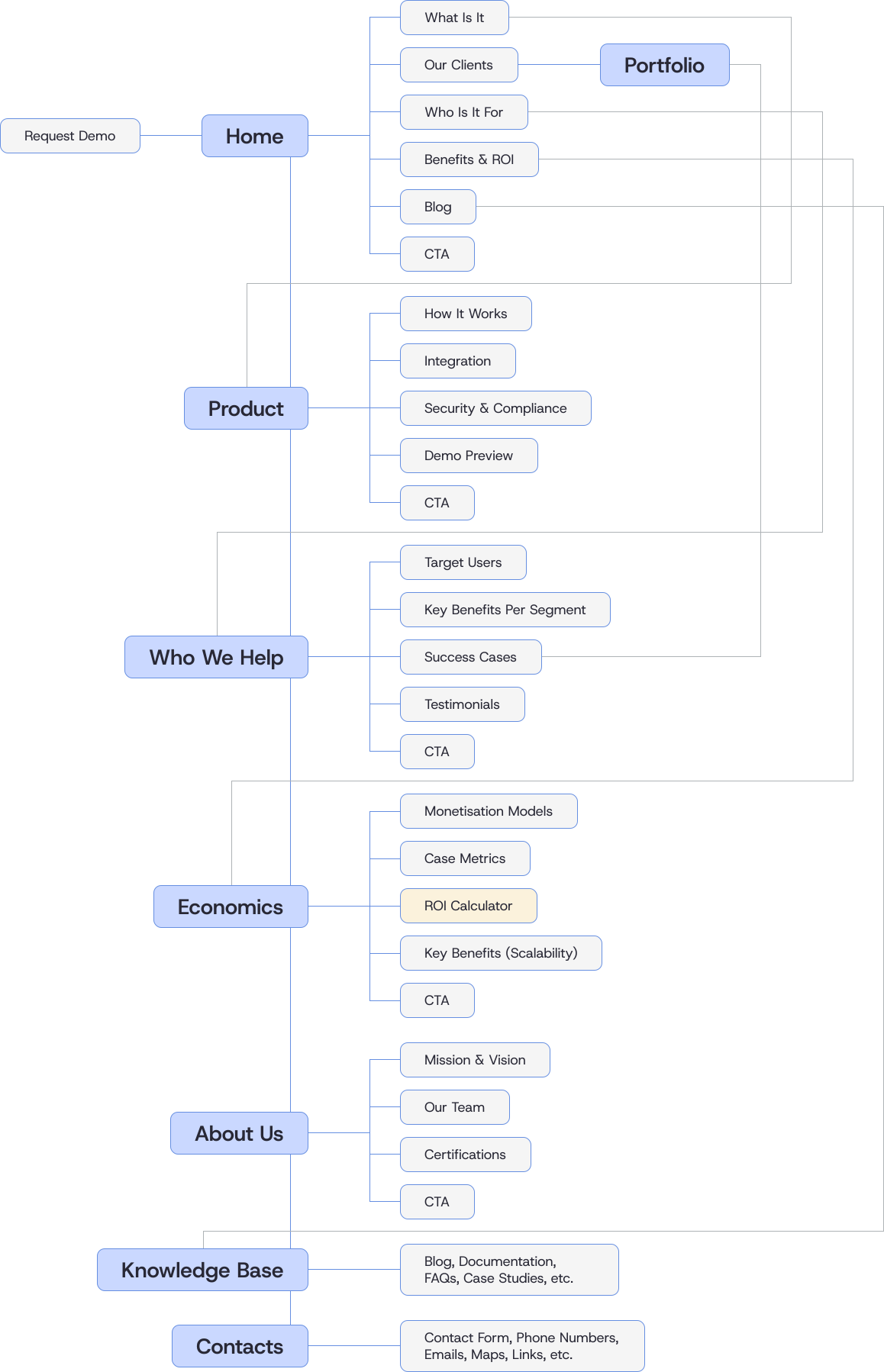
Persona-Driven Pathing
Content organised around specific stakeholders – each one led toward the action most relevant to them, whether that’s booking a demo or reviewing clinical evidence.
Frictionless Navigation
A minimal navigation system that reduces cognitive load. Busy healthcare professionals shouldn’t have to hunt for critical information.
Trust-Based Flow
Page structure moves from high-level value propositions to deep technical evidence – answering the credibility question before it’s asked.
Conversion Strategy
CTAs placed at high-intent moments: after viewing case studies, after diagnostic results, after the quiz. Not just at the bottom of the page.
the solution.
Structure that earns trust.
The structure had to mirror how a medical professional actually makes decisions – moving from high-level value to deep technical evidence, not the other way around. Every section earns the next.
the evolution.
Finding the right visual language.
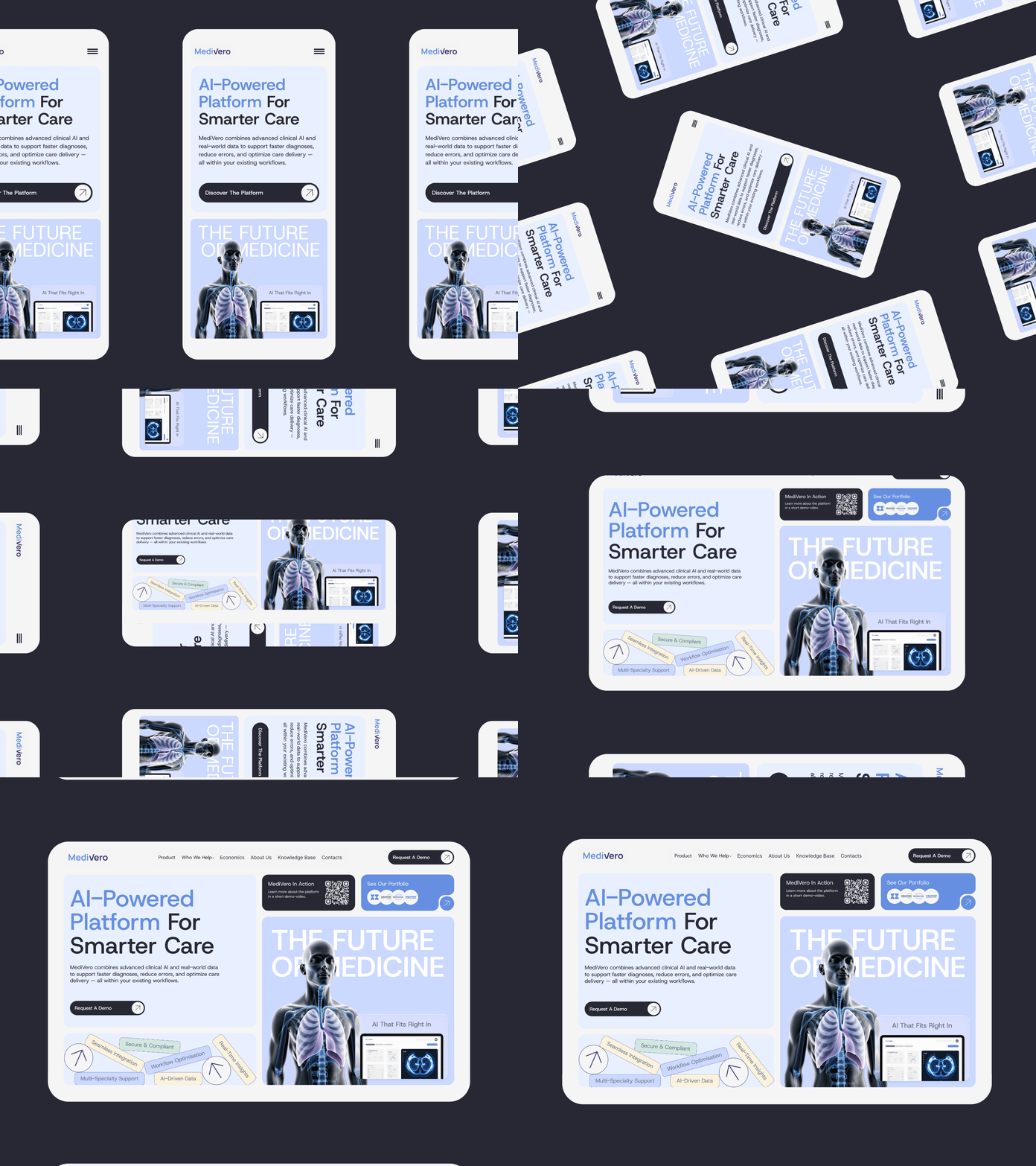
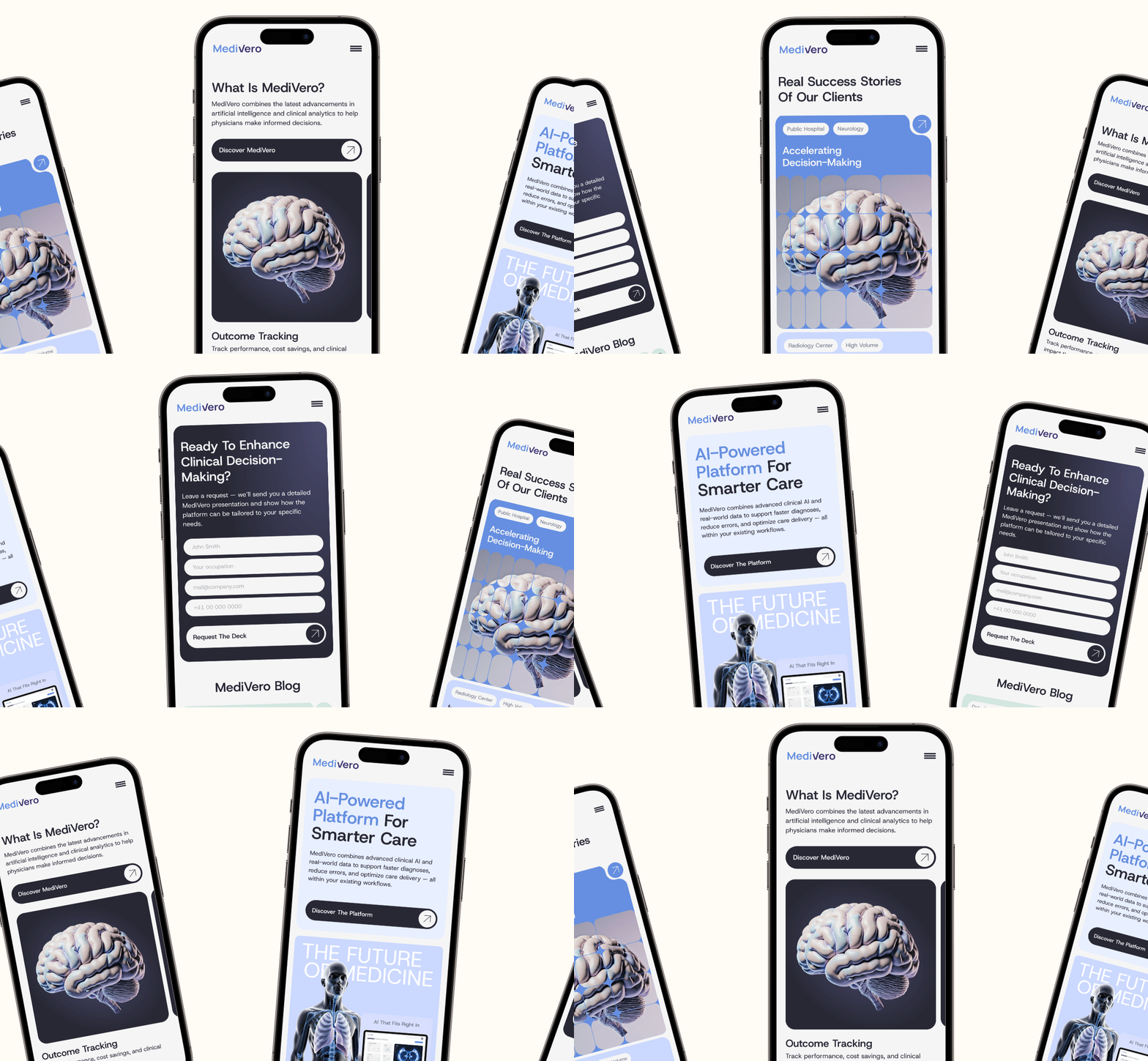
Getting the balance between "high-tech" and "clinical trust" right required testing rather than guessing. I used the hero section as the proving ground – five distinct directions, each evaluated against the same question: does this make a medical professional feel safe, or just impressed?
FIRST DRAFT

FINAL DESIGN

FINAL DESIGN vs. first draft
Visual System
Clean typography paired with light tones and yellow-green accents. Modern enough to differentiate from competitors, restrained enough to maintain clinical credibility.
Scalable Component Library
Every element built once, reused everywhere. Soft, rounded components that feel human rather than corporate – and scale cleanly as the product grows.
Structural Standards
Strict grid systems throughout. Airy layouts that still meet the functional requirements of a high-stakes healthcare product.
the work.
Built to hold up at scale.
The visual direction had to hold up across an entire platform, not just a single hero. So I built a complete design system – components, spacing, colour rules, and typography standards that could scale as the product grew.




ai tools.
Imagery that works as hard as the copy.
The standard approach would have been stock photography. I chose differently. Custom AI-generated visuals replaced generic imagery with high-fidelity, stylised scenes. Every visual reinforced the same message as the copy – the imagery wasn’t decorative, it was strategic.
interactive design.
Where the product experience starts.
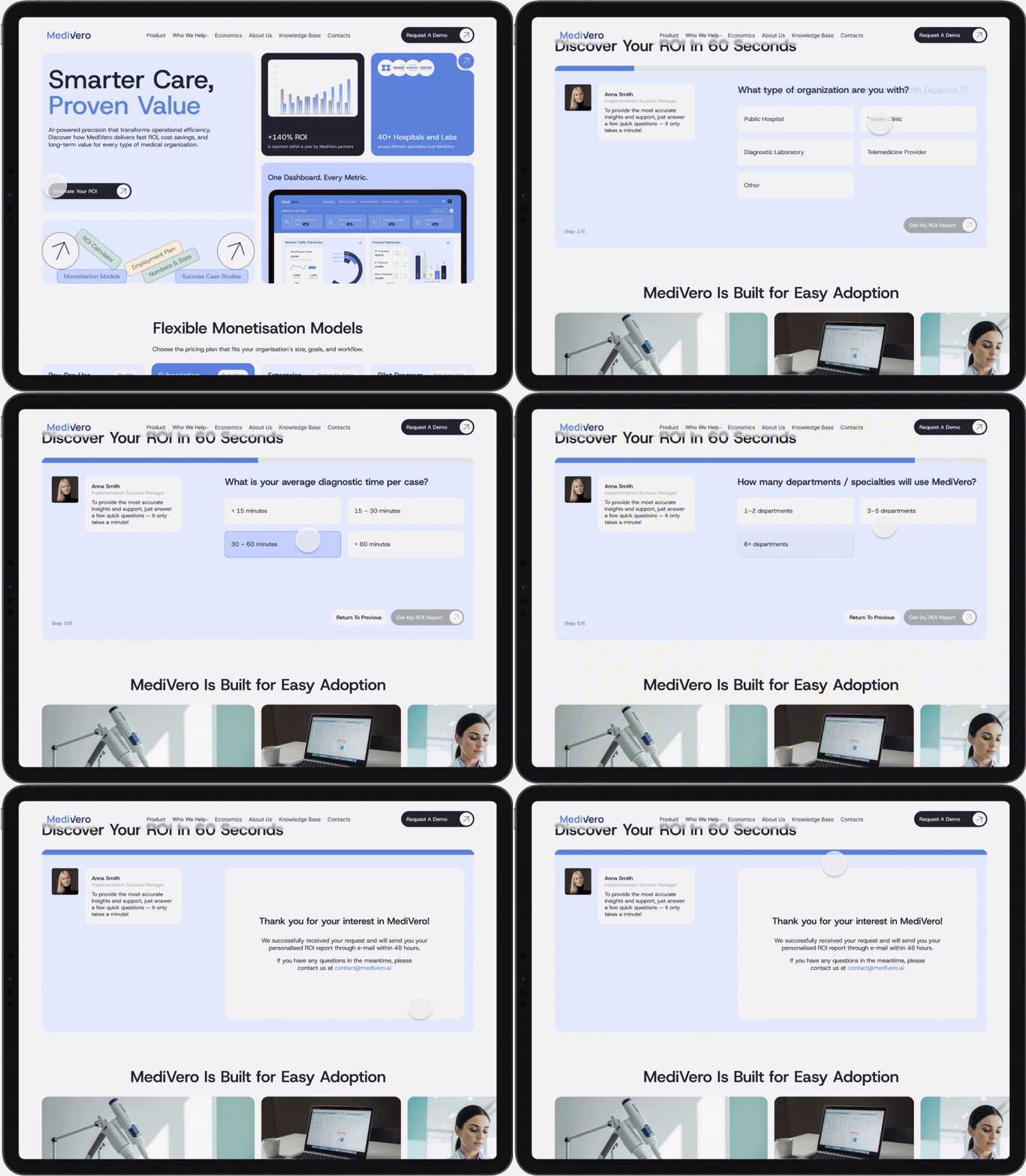
Static forms often lose people. The central interactive feature – a quiz – transforms a traditional lead capture form into a conversational flow. Users receive tailored insights in a few clicks rather than filling out a generic contact form.
A static form would have qualified leads. A conversational quiz increased engagement time and made the first interaction feel like the product itself – intelligent and responsive.
the outcome.
A concept built to the standard of the real thing.
MediVero is a speculative concept – and that’s worth naming directly. Concept cases are sometimes dismissed as "not real work." But the absence of a client brief, a stakeholder to please, and a safe middle ground to retreat to means every decision had to be justified on its own merits. There was no one to approve the bold choice. That’s a different kind of rigour.
What this case demonstrates: the ability to identify a real problem from scratch, build a research-backed strategy around it, and execute to a standard that belongs in the market it’s designed for.
GOT AN IDEA? I’M ALL EARS.
No need for a polished brief – a rough idea is enough to start a conversation. Fill in the form and I’ll be in touch shortly.
By submitting this form you agree to my privacy policy.
By submitting this form you agree to my privacy policy.
