
lazy
pack
pack
lazypack
Landing page design & no-code development for a pre-launch AI shipping startup.
Convincing strangers to join a waitlist for a product that doesn’t exist yet is one of the hardest things a landing page can do. Here’s how design made them click anyway.
ux research
ui design
no-code development
copywriting
figma
elementor
saas
landing page
The Context

LazyPack is a German startup building an AI-powered shipping platform. The app identifies an item from a photo, selects the best carrier, and handles the rest. At the time of this project, the product wasn’t live yet.
The Objective

The goal was to build a pre-launch landing page that makes an unknown AI product feel credible, simple, and worth waiting for – and converts skeptical visitors into waitlist signups.
My Role & Impact

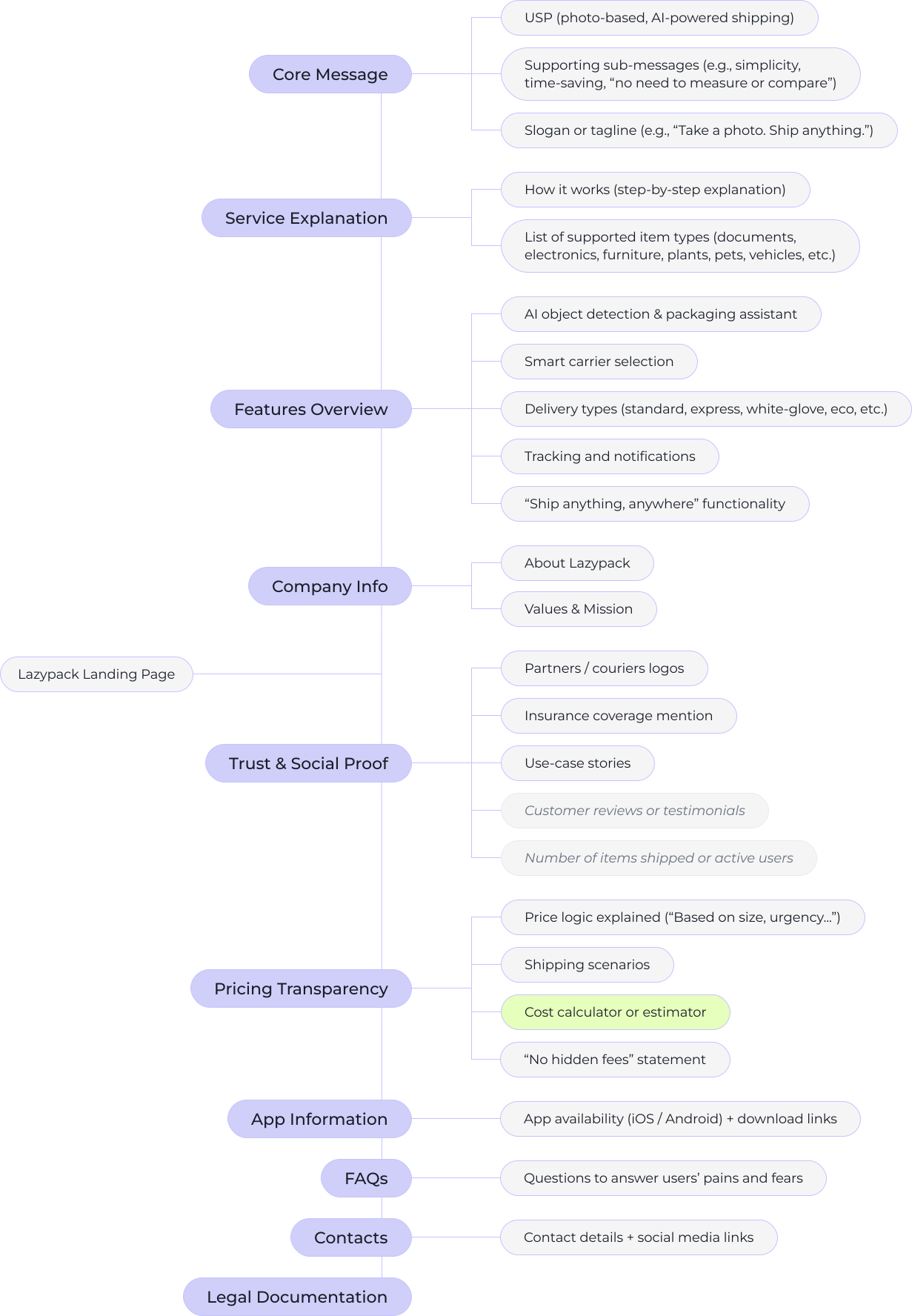
I owned the end-to-end process: from competitive research and information architecture to UI design. I also handled the full technical implementation, building the live site in Elementor.
Scope & Delivery

Executed in 6 weeks, the project moved from initial wireframes to a live, responsive site. The final product serves as the startup’s primary tool for market validation and lead acquisition.
the situation.
project overview.
the problem.
Bridging the Gaps.
The brief was clear: communicate simplicity, innovation, and trust. But research revealed that "trust" for LazyPack wasn’t a single problem – it was two distinct barriers operating at the same time.
Both gaps had to be solved simultaneously. Solving one without the other wouldn’t convert.
01_The Clarity Gap
Users encountered a genuinely novel concept. "Take a photo and ship anything" sounds almost too simple. Without a live product to demonstrate, the landing page had to make the AI feel real and understandable in seconds.
02_The Trust Gap
LazyPack was asking strangers to commit – even just an email address – to a brand they’d never heard of, for a service that replaces logistics giants they already knew. Credibility had to be built from zero.
the key insights.
The problem hiding inside the brief.
The research revealed an interesting idea: users don’t want a better shipping tool. They want the shipping problem to disappear.
This reframed the entire design direction: not "explain the features" but "make effortlessness feel real."
The reference point
The biggest players in shipping weren’t LazyPack’s real competition in terms of design. They were the reference point users carried into the page. And that reference point was negative. Every major logistics interface is heavy, form-dense, and stressful.
The implication
LazyPack’s AI already solved that problem – the design just had to make that feel true before anyone had used it. If the page itself felt effortless, users would believe the product would too.

the decisions.
Designing for trust.
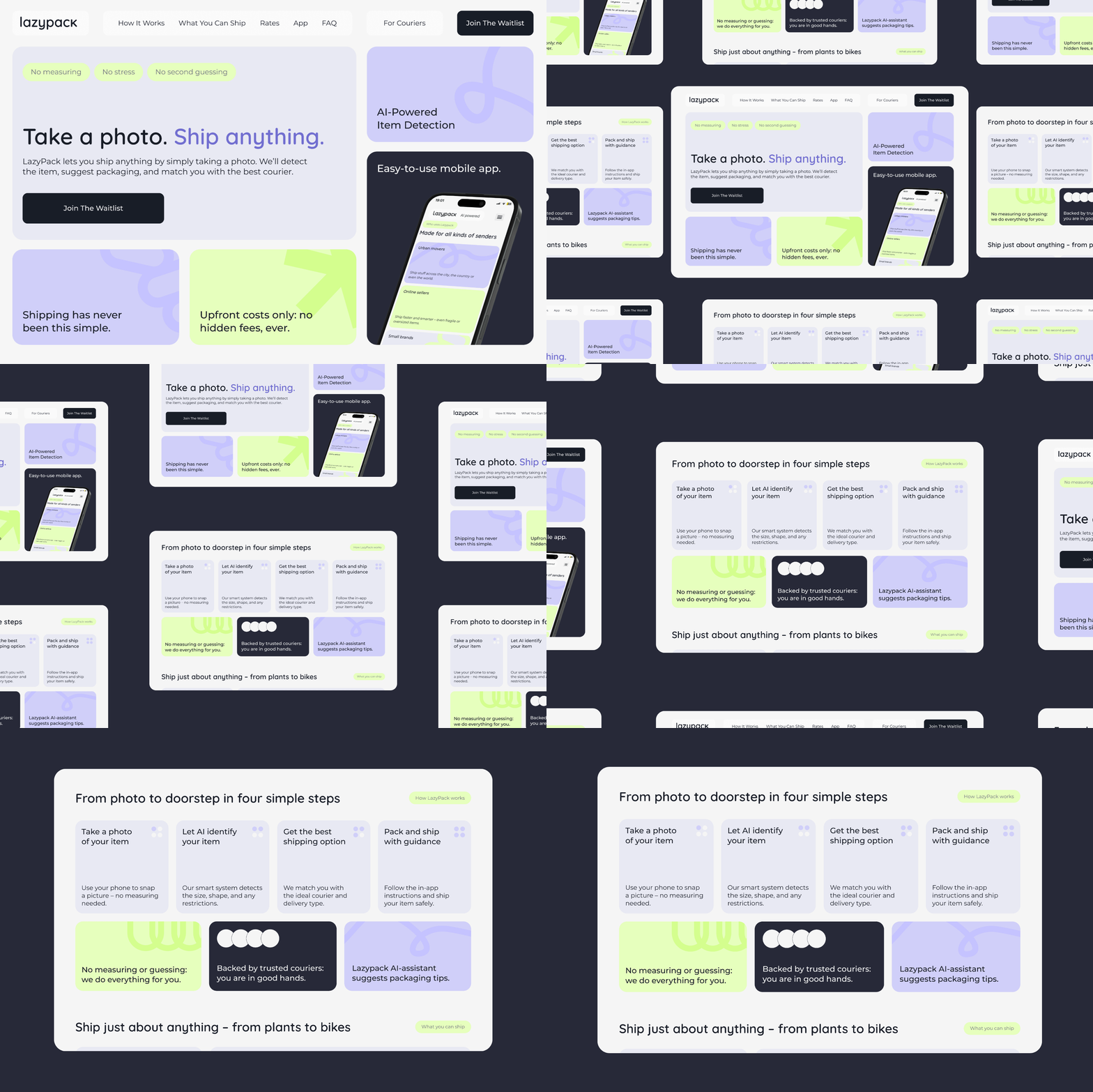
Visual flow instead of copy to explain the AI
An interactive demo would have been ideal, but the product wasn’t live yet. Rather than defaulting to explanation, I used a visual step-by-step flow. Users understood the product faster by seeing it than reading about it.
Decision 3
Visual flow instead of copy to explain the AI
Bento grid over standard linear scroll
The modular structure wasn’t just aesthetic – it was functional. For a logistics product asking users to trust an unknown AI, the layout was doing trust work before a word was read.
Decision 2
Bento grid over standard linear scroll
Lead with the AI feature, not with social proof
LazyPack had no testimonials or press yet. Borrowed credibility would have felt hollow – so I made the product itself the trust signal. If the AI concept lands immediately and feels effortless, the credibility follows.
Decision 1
Lead with the AI feature, not with social proof

Colour & Typography
Clean, light, and intentional. The palette keeps the interface airy – so the AI features stay in focus rather than competing with the chrome around them.
Scalable Component Library
Every element built once, reused everywhere. Soft, rounded components that feel human rather than corporate – and scale cleanly as the product grows.
the work.
Where the strategy became visual.
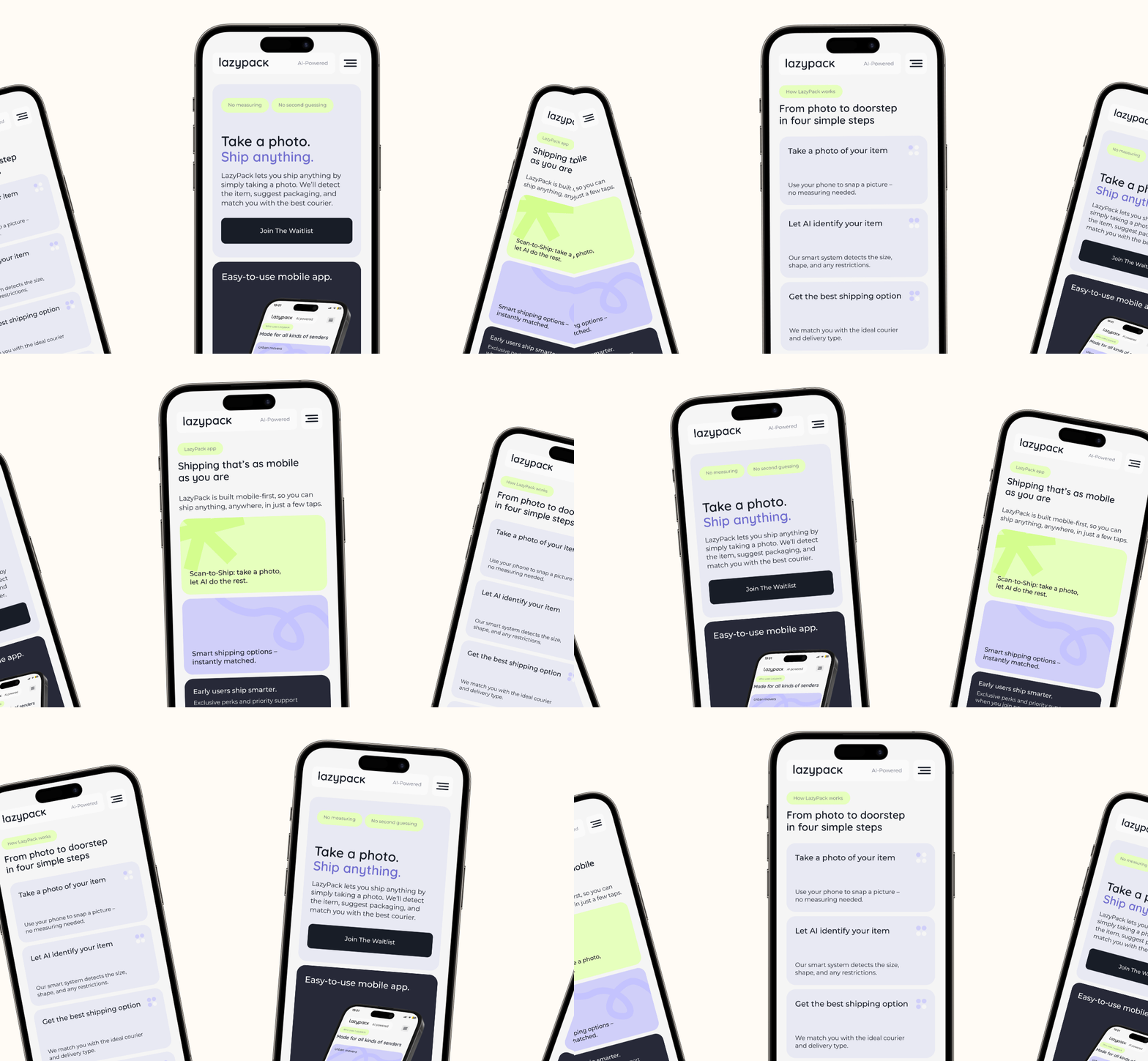
The visual direction needed to hold up beyond a single page. So rather than designing in isolation, I built a modular system – components, spacing, and colour rules that could scale as the product grew.


the outcome.
From zero to waitlist.
The landing page launched as LazyPack’s primary market validation tool – the first touchpoint for every potential user, partner, and investor during the pre-launch phase. The clearest measure of success came from the client directly:




GOT AN IDEA? I’M ALL EARS.
No need for a polished brief – a rough idea is enough to start a conversation. Fill in the form and I’ll be in touch shortly.
By submitting this form you agree to my privacy policy.
By submitting this form you agree to my privacy policy.
